Hey! I’m new to both this forum & the Pi-Top scene, having only recently picked up a new Pi-Top v1 laptop a month or so ago. Am tempted to buy a Pi-Top v3 laptop too someday.
Like others on here, I’ve been trying to get the Pi-Top to accept the Pi5 and found a little ‘hack’ that I’m exploring currently.
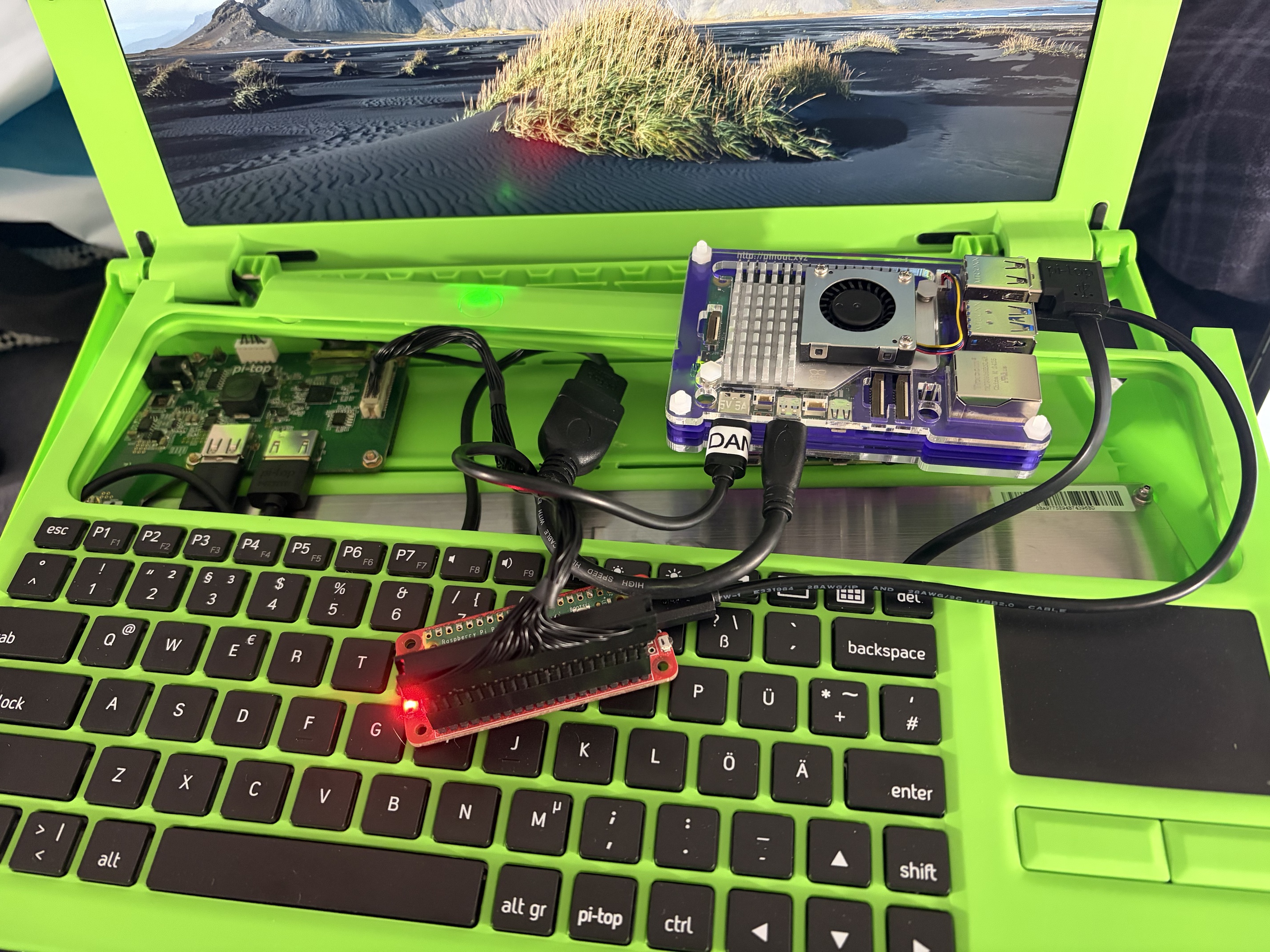
By connecting the GPIO header from the Pi-Top hub to a Pico connected to a Pico to Pi adapter, this ‘tricks’ the hub in turning on the screen when pressing the power button; I then just have this Pico connected to the Pi4 or Pi5 for power:
(Haven’t mounted anything in this pic as was testing at time)
The Pico was formatted with CircuitPython (as that’s what I had on it at the time) but since switched to MicroPython, which too works fine.
I’ve also been able to get the Pico to read the battery levels over I2C with the help of ChatGpt (same as the Pi would had); the plan here would to then connect a I2C OLED display to the Pico to display this info. Where I’m kind of stuck on (or yet to find time to research this further) is to control the Screen Brightness.
I know this is controlled by SPI (from what I’ve read) but finding any examples from the original Pi-Top to how this is done problematic. The plan again once cracked, would to have the brightness controlled by the Pico using some buttons wired directly into it’s GP pins (or could be another I2C device; got a 4 button device from adafruit that may work better here).
I know this sounds silly, but having all the Pi-Top hub functions controlled by the Pico over the Pi allows me to leave the Pi’s GPIO pins free for any Pi hat/device I wish, and allows me to run any OS version on the Pi without having to worry about trying to control the Pi-Top hub; could even use a different SBC if I fancied as it would only need to interface with HDMI and USB power.
If anyone could shed any light or codes on controlling the Pi-Top v1 screen brightness would be very grateful!
Thanks!
Dani


 Have you thought about sending this to the Hackaday tipline? I’d be surprised if it wasn’t exactly the sort of thing they’d like to do an article on